

Blackjack doubling down can turn a promising hand into a bigger win, but choosing the wrong moment can cost you twice your original stake. It is one of the most valuable decisions in the game when used correctly.
Whether you are learning blackjack at Shakebet Casino or playing at a physical table, understanding when to double matters. This guide explains the rules, identifies the hands worth doubling and walks through winning and losing examples so you know what to expect.
What Doubling Down Actually Means
Doubling down means increasing your original blackjack bet by 100% after receiving your first two cards. In return, you receive exactly one additional card, and your hand is complete.
The decision makes sense when your starting cards and the dealer’s visible card suggest that doubling offers a better expected return than taking a normal hit.
The same principle applies to live table games when their rules permit doubling. You are committing a larger stake in exchange for one final card, not buying extra chances to improve your hand.
The Rules You Need to Know First
You normally have one opportunity to double down: immediately after receiving your first two cards and before taking another card.
However, blackjack tables do not all follow identical rules. Some allow doubling on any starting total, while others restrict it to 9, 10 or 11, or even just 10 and 11.
Check the rules before playing, particularly whether the dealer hits or stands on soft 17.
The site’s bonus offers have separate conditions, so check whether a particular offer covers blackjack rather than assuming it applies to every table.
Doubling After a Split
Double After Split, commonly called DAS, allows you to double down on a new hand created by splitting a pair.
Suppose you receive two 8s and split them. Each 8 becomes the starting card of a separate hand. If you receive a suitable second card on either hand, the DAS rule may allow you to double that hand.
This option matters because splitting can create new opportunities to make profitable doubling decisions.
Not every table permits DAS, and split Aces often have additional restrictions. Always check before committing the extra stake.
Reading the Table Before You Act
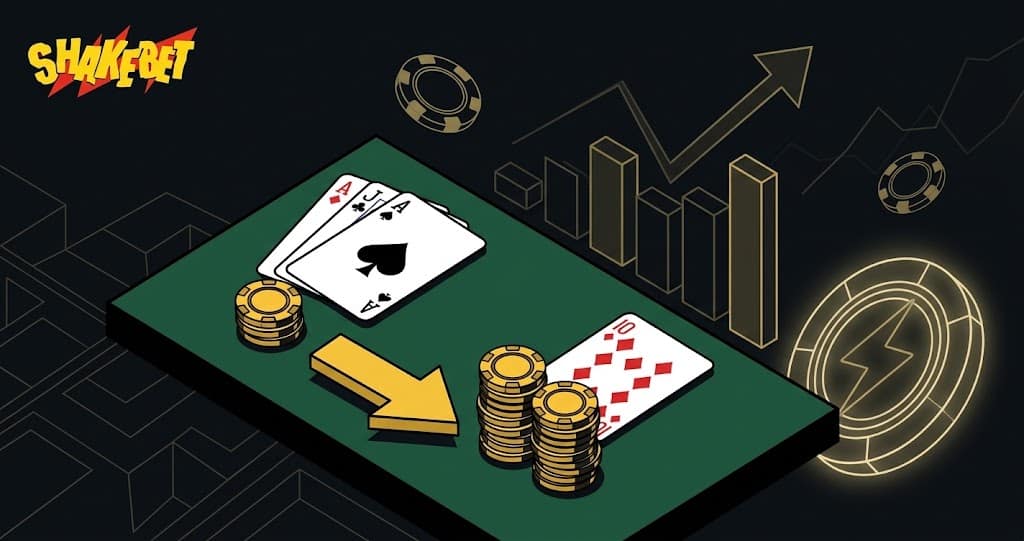
Your decision depends on two things: the value of your starting hand and the dealer’s visible card.
Blackjack hands fall into two categories, hard and soft. Each requires a different approach because an Ace can change how safely you can accept another card.
Hard Hands That Deserve a Double
A hard hand contains no Ace counted as 11. For example, a 6 and a 4 make a hard 10, while an Ace, a 5 and a 10 make a hard 16 because the Ace must count as 1.
Hard 9, 10 and 11 are the main doubling opportunities.
These totals benefit from the high concentration of 10-value cards in blackjack. Tens, Jacks, Queens and Kings together account for 16 cards in a standard 52-card deck.
A hard 11, for example, reaches 21 when the next card is worth 10.
For a standard multi-deck game where the dealer stands on soft 17, basic strategy recommends:
- Hard 9: Double against a dealer’s 3 through 6.
- Hard 10: Double against a dealer’s 2 through 9.
- Hard 11: Double against a dealer’s 2 through 10.
These decisions are based on expected returns, not guarantees. The dealer’s visible card determines whether the additional stake is mathematically worthwhile.
Soft Hands That Deserve a Double
A soft hand contains an Ace counted as 11. An Ace and a 6, for example, make soft 17.
The Ace gives you flexibility. If you draw a 10-value card, your Ace changes from 11 to 1, leaving you with 17 rather than a bust.
This means you cannot exceed 21 by taking one card on a two-card soft hand.
The following doubling decisions apply to a standard multi-deck game where the dealer stands on soft 17:
- Soft 13 or 14: Double against a dealer’s 5 or 6.
- Soft 15 or 16: Double against a dealer’s 4 through 6.
- Soft 17 or 18: Double against a dealer’s 3 through 6.
Soft 18 requires particular attention. Against a dealer’s 9, 10 or Ace, basic strategy generally recommends hitting rather than doubling.
If the dealer hits on soft 17, some recommendations change, including doubling soft 18 against a 2.
A Fast Reference for the Table
The chart below brings together the most common blackjack doubling down decisions.
It assumes four to eight decks, a dealer who stands on soft 17 and permission to double on any initial two-card hand.
| Your Hand Total | Dealer’s Upcard | Action |
| Hard 9 | 3 through 6 | Double |
| Hard 10 | 2 through 9 | Double |
| Hard 11 | 2 through 10 | Double |
| Soft 13 or 14 | 5 or 6 | Double |
| Soft 15 or 16 | 4 through 6 | Double |
| Soft 17 or 18 | 3 through 6 | Double |
Important: This chart is a general blackjack strategy reference, not a verified description of the rules at every ShakeBet table. Different rules can change the recommended play.
The chart applies specifically to blackjack. If you also explore slot games, remember that their outcomes do not depend on decisions such as hitting, standing or doubling.
Placing the Bet the Right Way
At a physical blackjack table, doubling down involves a few straightforward steps.
- Check your first two cards and the dealer’s visible card.
- Confirm that the table permits doubling on your hand.
- Place another stack of chips equal to your original wager beside it.
- Tell the dealer you want to double, using the appropriate hand signal if required.
- Receive one additional card.
The dealer may place your final card sideways to indicate that you have doubled.
Once that card arrives, you cannot hit again. If your total remains at 21 or below, you must stand. If it exceeds 21, your hand immediately loses.
Hands Where Doubling Backfires
A starting total that looks promising is not automatically worth doubling.
Consider hard 10 against a dealer’s 10 or Ace. These upcards suggest a stronger dealer hand, making a normal hit preferable under the standard strategy used in this guide.
Hard 11 is different. Doubling against a dealer’s 10 remains a recommended play, but against an Ace, you would normally hit if the dealer stands on soft 17.
Avoid doubling hard totals of 12 through 16 under these standard rules. The risk of exceeding 21 is too high to justify increasing your stake.
Hard 17 or higher should generally stand rather than take another card.
The lesson is simple: assess your total and the dealer’s upcard together. Neither tells the whole story on its own.
Sharpen Your Doubling Decisions
A few habits can improve how consistently you apply blackjack strategy.
First, learn the chart for the specific rules you are playing. Memorising the hard 9, 10 and 11 combinations gives you a practical starting point.
Second, consider your total exposure before a session. Doubling means putting twice your opening stake at risk, and several losing hands can quickly reduce your available balance.
Finally, practise using virtual chips before increasing your stakes. Repeating the same decisions without financial pressure helps you recognise qualifying hands more confidently.
Basic strategy can reduce avoidable mistakes, but it cannot eliminate the house edge or prevent losses.
The Errors That Cost Players Most
Players often make the same mistakes when deciding whether to double.
Doubling because the dealer looks weak: A dealer’s 5 or 6 is not enough reason to double every hand. Your own total must also qualify.
Ignoring the table rules: A strategy designed for one blackjack variation may recommend a different action under another.
Doubling to recover losses: The previous round does not make your next hand more likely to win. Increasing your stake to recover earlier losses adds exposure without improving the underlying decision.
Avoiding every correct double: Consistently choosing a normal hit when doubling has the better expected return sacrifices some of the value available from favourable starting hands.
A Winning Double and a Losing One
Understanding the calculation is easier when you follow a complete hand from start to finish.
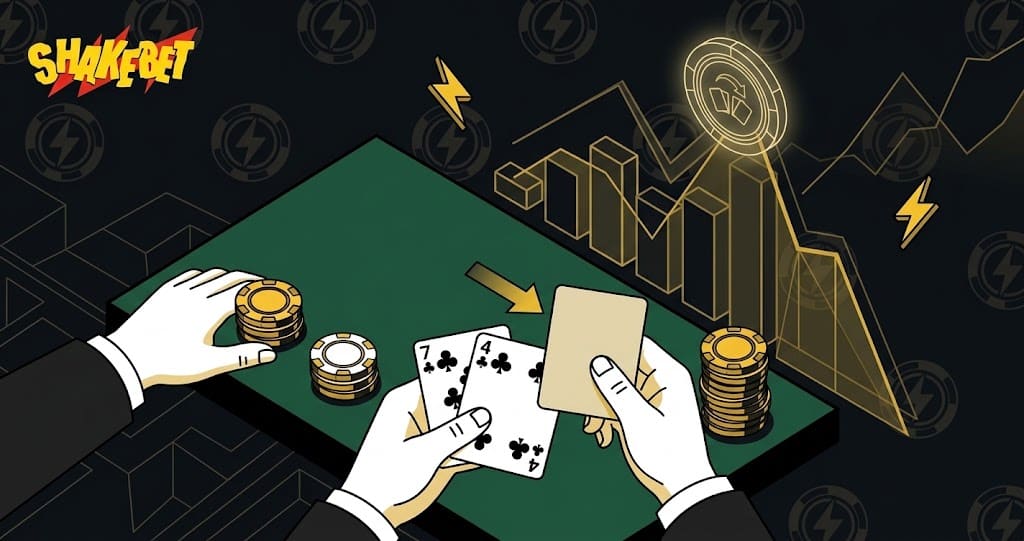
Example 1: A Double That Wins
You begin with a wager of 10 chips.
Your cards are a 6 and a 4, giving you a hard 10. The dealer shows a 5.
This is a recommended doubling opportunity under the standard strategy covered earlier.
You add another 10 chips, bringing your total stake to 20.
Your final card is a King, worth 10, bringing your hand to 20.
The dealer reveals a 9, making 14, then draws an 8 and busts with 22.
Your result:
| Item | Chips |
| Original wager | 10 |
| Additional wager | 10 |
| Total stake | 20 |
| Winning profit | 20 |
| Total returned | 40 |
You earn a profit of 20 chips instead of the 10 chips you would have earned from an ordinary winning wager of the original size.
Example 2: A Correct Double That Loses
You begin another hand with 10 chips.
Your starting cards are a 6 and a 5, giving you hard 11. The dealer shows a 6.
You correctly double to a total stake of 20 chips.
Unfortunately, your additional card is a 2, leaving you with just 13.
The dealer reveals a 9, making 15, then draws a 5 to finish on 20.
Your hand loses.
Your result:
| Item | Chips |
| Original wager | 10 |
| Additional wager | 10 |
| Total stake | 20 |
| Total lost | 20 |
You made the recommended decision but still lost both wagers.
That distinction matters. A mathematically sound double can improve your expected return across many comparable hands without guaranteeing the outcome of any individual round.
Why Flinching Costs More Than Losing
Doubling can feel uncomfortable after several losing hands, particularly when you know a poor final card could cost twice your opening stake.
However, choosing a normal hit instead of a recommended double can reduce the expected value of that hand.
A hit and a double are not identical decisions. Hitting preserves the option to take further cards, while doubling commits you to one. Basic strategy compares those alternatives and identifies which offers the better expected return.
Follow the appropriate chart rather than changing decisions according to recent results or instinct.
Doubling Down on Screen vs at the Table
Physical blackjack requires you to place additional chips and communicate your decision to the dealer.
Online blackjack generally handles the process through a Double button.
Select it when the option is available, and the interface adds the required stake before dealing your final card.
At a live-dealer table, the software records your choice while the dealer handles the cards.
The method changes, but the underlying strategy does not. You still evaluate your starting hand, the dealer’s upcard and the table rules before committing to one final card.
Frequently Asked Questions
-
Doubling down means adding a second wager equal to your original bet after receiving your first two cards. You then receive exactly one additional card. The decision can increase your profit on a winning hand, but it also increases your potential loss.
-
No. Under standard multi-deck rules where the dealer stands on soft 17, doubling hard 11 is recommended against dealer upcards from 2 through 10. Against an Ace, hitting is normally preferable. Different rules, including whether the dealer hits soft 17, can change this recommendation.
-
After doubling, you receive one additional card and your hand is complete. If your total exceeds 21, you immediately lose both wagers. Otherwise, the dealer finishes their hand, and the outcome determines whether your doubled stake wins, loses or pushes.
-
Yes, if the table permits Double After Split. This rule allows you to double an eligible hand created by splitting a pair. Some blackjack variations restrict doubling after a split, particularly when splitting Aces, so check the rules before playing.
-
No. Blackjack doubling down increases the amount you have at stake without guaranteeing a favourable final card. A correct decision can still produce a losing hand. The purpose of doubling strategically is to improve your expected return when the starting conditions justify the additional risk.