

New to Spanish 21 and not sure what your first move should be? This guide walks you through the basics, from how a hand plays out to the rules and bonus payouts that make the game different.
You’ll also see why table rules matter and what to keep in mind when comparing Spanish 21 with standard blackjack. If you’d like to explore casino games online, Shakebet Casino is a place to start.
What Sets Spanish 21 Apart From Blackjack
Spanish 21 may look like blackjack, but it plays by its own rules. The deck is different, some player options vary, and bonus payouts add another twist. Knowing these basics can help you understand what to expect before taking a seat.
Exploring online casinos for the first time? Shakebet’s top promotions may be a useful place to start browsing.
How the Spanish Deck Differs From a Standard One
Spanish 21 uses a 48-card deck, while a standard deck has 52 cards. The difference is simple: Spanish 21 removes all four 10s but keeps the jacks, queens and kings.
- Standard deck: 2–10, jack, queen, king and ace in each suit
- Spanish 21 deck : 2–9, jack, queen, king and ace in each suit
Face cards still count as 10, and aces can count as 1 or 11. With fewer 10s in the deck, hands form differently than they do in standard blackjack. Keep that in mind when choosing whether to hit or stand.
What You’re Trying to Do in Spanish 21
In Spanish 21, your goal is to finish with a hand closer to 21 than the dealer’s, without going over. You don’t need an exact 21 to win; any total can take the hand if it beats the dealer’s.
Go over 21, and your hand “busts,” which means you lose your bet. If you and the dealer finish with the same total, it’s usually a tie, or push, and your bet is returned.
The Extra Payouts That Define the Game
Spanish 21 adds bonus payouts for certain hands, giving players more to look out for than a high total alone. Common examples include a 21 made with five, six or seven cards, or specific 6-7-8 and 7-7-7 combinations.
The table below shows examples found on some paytables, not universal payouts. Exact awards depend on the casino, and some combinations may have extra conditions. Check the rules displayed at your table before betting.
| Bonus Hand | Pays | Notes |
| 5-card 21 | 3:2 | 21 made with five cards |
| 6-card 21 | 2:1 | 21 made with six cards |
| 7+ card 21 | 3:1 | 21 made with seven cards or more |
| 6-7-8 mixed suits | 3:2 | Cards are not all the same suit |
| 6-7-8 suited | 2:1 | All three cards share a suit |
| 6-7-8 spades | 3:1 | All three cards are spades |
| 7-7-7 mixed suits | 3:2 | Sevens are not all the same suit |
| 7-7-7 suited | 2:1 | All three sevens share a suit |
| 7-7-7 spades | 3:1 | All three cards are spades |
These special awards can bring to mind the occasional big hit in slot machine games, but Spanish 21 remains a card game where decisions matter. Treat bonuses as an extra, not something to chase.
How the Super Bonus Hand Works
The Super Bonus is an extra award for a rare hand, but its exact requirements depend on the casino. At some tables, it pays when you make 7-7-7 with three sevens of the same suit while the dealer shows a 7.
Example: You hold 7♠-7♠? A standard deck has only one 7♠, so check the specific game rules and card combination required; typically, Spanish 21 uses multiple decks.
Follow the posted conditions carefully. Taking a hit, splitting, or doubling may disqualify a hand if the rules require the qualifying cards to be your original cards.
How the Envy Bonus Works
The Envy Bonus lets other players share a little excitement when someone hits a qualifying Super Bonus hand. The lucky player collects the main prize, and eligible players at the table may get an extra payout.
It’s not available everywhere, so check the rules for qualifying bets and amounts before playing.
The Flow of a Spanish 21 Hand
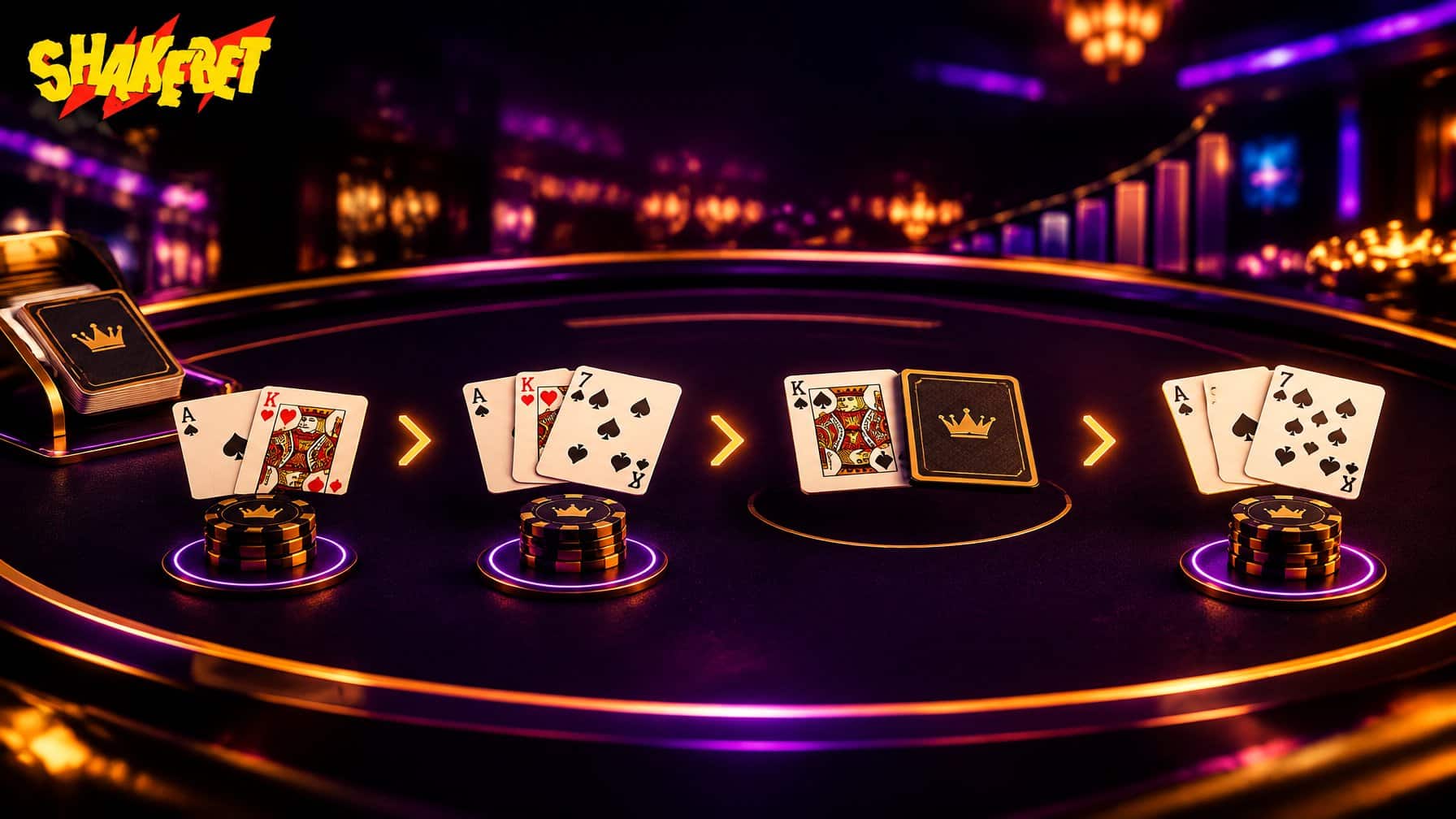
A Spanish 21 hand starts when you place your bet and the dealer gives you two cards. Say you have 7 and 8 for 15, while the dealer shows a 6. You choose whether to hit or stand, aiming to beat the dealer without going over 21.
Once every player finishes, the dealer follows the table rules and reveals their hand. If the dealer busts, your 15 wins; if they finish on 18, you lose. A winning hand is paid according to the table’s payout rules.
Curious about the pace of live casino games? Watching a live table can help you get familiar with how turns unfold.
Core Player Moves
- Hit: Take another card to improve your total; bust if you go over 21.
- Stand: Keep your current total and end your turn.
- Double down: Increase your bet and take the card allowed by the table’s rules.
- Split: Separate a pair into two hands, if splitting is permitted.
- Surrender: Give up the hand for a partial loss, when offered.
- Insurance: An optional side wager against dealer blackjack. Check the table rules to see if it’s available.
Core Rule Changes at a Spanish 21 Table
Spanish 21 rules are easier to remember when grouped by what happens to your hand: how 21s are settled, how you can build or adjust hands, and when you can surrender. The exact options can vary, so use these groups as a guide and check the table rules before playing.
Blackjacks and 21s: Who Wins Ties
Spanish 21 tables commonly give a player’s natural blackjack priority over a dealer’s blackjack, so both hands may not automatically push as they would in standard blackjack. A natural usually means an ace plus a 10-value card as the first two cards.
Other 21s are different: a player’s multi-card 21 generally loses to the dealer’s 21, even if the player used more cards. Some tables may have special exceptions or bonus payouts, so read the posted rules carefully.
The key takeaway is not to assume every tie at 21 is settled the same way—check whether you have a natural blackjack or a hand totaling 21 with extra cards.
Splitting, Doubling and Rescue Together
These options let you reshape a hand, but they work in different ways. If you’re dealt a pair, splitting may turn it into two hands with separate bets. Doubling down means adding to your wager in exchange for a restricted number of additional cards, as the table rules allow.
For a closer look at doubling down in blackjack, learn how the extra wager changes both risk and potential reward. Some Spanish 21 tables also offer Double Down Rescue: after doubling, you may give up the hand and recover the added double-down bet, while losing the original wager. Confirm when rescue is allowed and whether it’s available after a split.
Surrender: The Exit Option
Surrender lets you fold a hand and usually lose only half your original bet. It is typically a late decision, made after your initial cards and once the dealer has checked for blackjack. If the dealer has blackjack, surrender may not be available. Rules vary, so confirm the timing before using it.
How the Match the Dealer Side Bet Works
Match the Dealer is an optional side bet that asks a simple question: will either of your first two cards share a rank with the dealer’s upcard? If the dealer shows a 9 and you’re dealt a 9, that’s a match.
A match is suited when both the rank and suit are the same; it’s non-suited when only the rank matches. This wager is separate from your main hand, so you could win it even if the dealer beats you, or miss the side bet while winning the round. Check the table’s paytable before deciding whether to play it.
Payout Levels for Matching Cards
Payouts depend on the casino’s paytable, so don’t assume every table pays the same. Rivers Casino Philadelphia lists the following Match the Dealer awards; compare them with the rules posted wherever you play.
| Match Type | Pays | Casino Source |
| 1 non-suited match | 3:1 | Rivers Casino |
| 2 non-suited matches | 6:1 | Rivers Casino |
| 1 suited match | 2:1 | Rivers Casino |
| 1 non-suited and 1 suited match | 15:1 | Rivers Casino |
| 2 suited matches | 24:1 | Rivers Casino |
These figures come from one published casino table, not a universal schedule. Check the local paytable for current payouts before placing a side bet.
Playing Smart: Spanish 21 Strategy Basics
A Spanish 21 strategy chart helps you choose when to hit, stand, double, split or surrender. Use one made for Spanish 21, not a regular blackjack chart, because the 10s are missing and the game offers different rules and payouts.
Start by checking the dealer’s upcard and your hand total. Then follow a chart matched to your table’s rules, including whether the dealer hits or stands on soft 17 and whether redoubling is allowed. These details can change the best move.
The Wizard of Odds provides strategy tables for different rule sets. Strategy can improve your decisions over time, but it can’t guarantee a win on any hand.
Odds Check: Spanish 21 Against Standard Blackjack
There isn’t one fixed house edge for Spanish 21: rule details, such as whether the dealer hits soft 17, can change the math. Wizard of Odds estimates a 0.40% edge when the dealer stands on soft 17, 0.42% when the dealer hits soft 17 and redoubling is allowed, and 0.76% when the dealer hits soft 17 without redoubling.
| Game | Rule Set Assumed | House Edge | Source |
| Spanish 21 | Dealer stands on soft 17 | About 0.40% | Wizard of Odds |
| Spanish 21 (alternate rule set) | Dealer hits soft 17; redoubling allowed | About 0.42% | Wizard of Odds |
| Standard blackjack | Varies by rules and strategy | No comparable figure listed | Rivers Casino Philadelphia |
These figures are not a direct, like-for-like comparison with standard blackjack. House-edge estimates can differ because casinos use different rules and analysts may assume different strategies or conditions. Check the casino’s own rules and paytable before comparing games.
Table Manners and House Rules
A few simple habits make Spanish 21 smoother for everyone. Place your bet before the deal begins, and wait for the next round if betting has closed. At many tables, you’ll signal decisions with hand gestures; whether you can touch the cards depends on the game’s setup.
House rules aren’t identical everywhere. Follow the dealer’s instructions, keep chips and drinks clear of the playing area, and ask questions between hands. If you’re unsure about betting or handling cards, check the table’s posted rules before you play.
Check the Rule Sheet: Where Casinos Differ
Before placing a bet, take a moment to check the table’s rule card. Confirm the Match the Dealer payout and limits, whether Double Down Rescue and insurance are offered, how surrender works, and which bonus hands pay extra.
The examples below are drawn from each casino’s published Spanish 21 information. “Not listed” means the website doesn’t spell out that detail, it doesn’t necessarily mean the option isn’t available. Casino rules can change, so confirm the current terms with the dealer before placing your bet.
| Rule | Seneca Buffalo Creek Casino | Blue Lake Casino | Rivers Casino Philadelphia |
| Match the Dealer payouts | Not listed | Not listed | 3:1 for one non-suited match; other payouts listed |
| Match the Dealer bet limits | Not listed | Not listed | $1 minimum; up to the basic wager, capped at $500 |
| Double Down Rescue offered | Yes; recover the doubled portion and forfeit the original wager | Not listed | Yes; take back the doubled portion and forfeit the original bet |
| Insurance offered | Not listed | Yes; described when the dealer shows an ace | Yes; up to half the original wager when dealer shows an ace |
| Surrender terms | Not listed | Late surrender described; half the bet is forfeited | Surrender on the first two cards; lose half, unless dealer has blackjack |
| Bonus payout differences | General note: 21 against dealer’s 21 can pay up to 3:1 | Lists 5-card, 6-card, 7+ card 21, 6-7-8 and 7-7-7 bonuses | 5-card 21: 3:2; 6-card: 2:1; 7+ cards: 3:1; 6-7-8 and 7-7-7 bonuses, plus Super Bonus and Envy Bonus |
Common Questions About Spanish 21
-
Card counting is possible, but it’s difficult and may not be worth the effort for most casual players. Rules and multiple decks make tracking cards challenging. Laws vary, and casinos can restrict or refuse service to players they believe are counting.
-
The four 10s are removed to create a 48-card deck, while jacks, queens and kings remain. Those face cards still count as 10, as do any other 10-value cards used under the table’s rules. The altered deck helps distinguish Spanish 21 from standard blackjack.
-
You can create as many hands as the table’s split rules allow. Usually, you split a pair into two hands, then play each one separately. Some tables permit resplitting pairs; check whether you can also double down after splitting.
-
You can learn the basic flow in a few minutes. The objective is familiar: beat the dealer without going over 21. Getting comfortable with the deck changes, special payouts and table-specific options takes more practice.
-
Bonus payouts may reward multi-card 21s and special combinations such as 6-7-8 or 7-7-7. Which hands qualify—and how much they pay—depends on the casino’s paytable. Check the posted rules before playing, since bonuses aren’t identical at every table.