

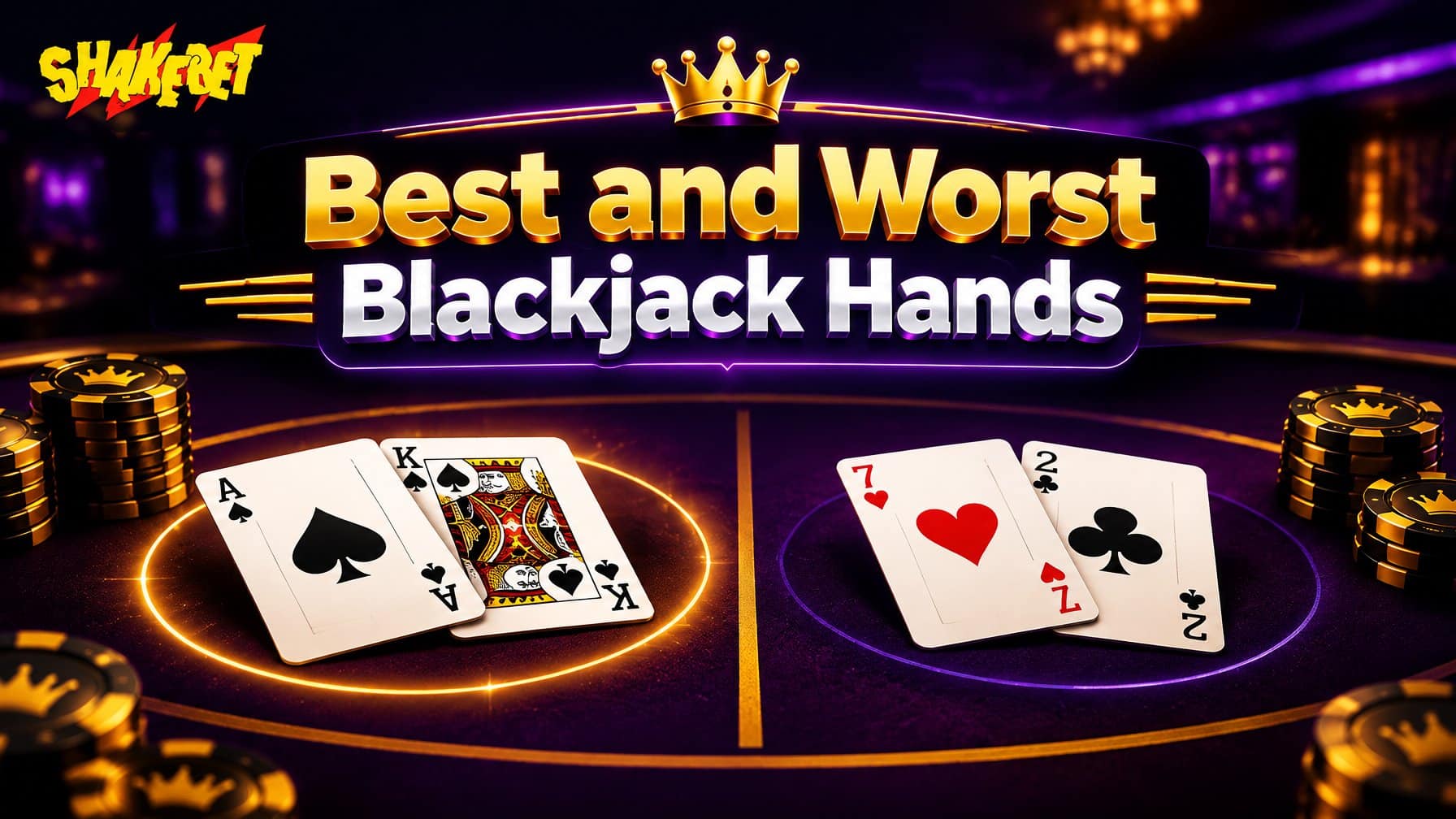
Best and Worst Blackjack Hands aren’t always obvious, even if you know the rules. Maybe you’ve stared at a hard 16, wondered whether to split a pair, or watched the dealer’s upcard and changed your mind at the last second. You’re in good company.
This Shakebet Casino guide makes those tricky calls easier. We’ll look at which hands are genuinely strong or weak, why the dealer’s card changes your options, and how hand values stack up over time.
There’s also a quick myth check to separate solid strategy from table talk. Keep it handy while exploring the blackjack games, and make your next decision with a little more confidence.
The Hands That Deserve Your Confidence
Some hands give you a clear, sensible plan—no dramatic gut checks required. The usual confidence crew includes a natural blackjack, strong totals from 17 to 20, useful opening totals of 10 or 11, and a few key pairs. Here’s how to handle each without letting one surprising card shake your strategy.
Blackjack: When You’re Dealt the Natural
A natural is an Ace plus a 10-value card in your first two cards. It usually beats any non-blackjack hand and pays more than a regular win—but check the table: a 3:2 payout is better for the player than 6:5.
If the dealer also has a natural, it’s a tie, called a push. Your original bet is returned, so neither side wins that round.
Strong Totals and Opening 10s and 11s
With a hard 20, stand. Hard 19 and 18 are usually stand hands, too, while hard 17 is generally a stand. Basic strategy charts can vary on close calls, so match yours to the table’s rules.
A starting 10 or 11 is different: doubling is often the smart move when the dealer’s upcard makes it favorable. The dealer’s card matters, and so do the rules on doubling. If you’re setting a play budget, you can also see the promotions separately; they don’t change the best play for a hand.
Aces, Eights and Tens: Pairs Players Doubt
A pair of Aces is usually split, giving each Ace a fresh chance to build a strong hand. A pair of eights is also commonly split: two hard 16s are a tricky start, while splitting gives you two opportunities to improve.
Two tens? Usually stand on 20, don’t break up a strong total. Some rules affect pair decisions, so check a strategy chart for your table. If you’re reviewing your budget, welcome bonus details are separate from hand strategy and don’t change the odds of a deal.
The Hands That Cause Second-Guessing
Some hands feel like a choice between two headaches: hit and risk busting, or stand and hope the dealer doesn’t improve. Hard 16 is the classic example, but totals from 12 to 15 can be awkward, too. The dealer’s upcard is your best clue.
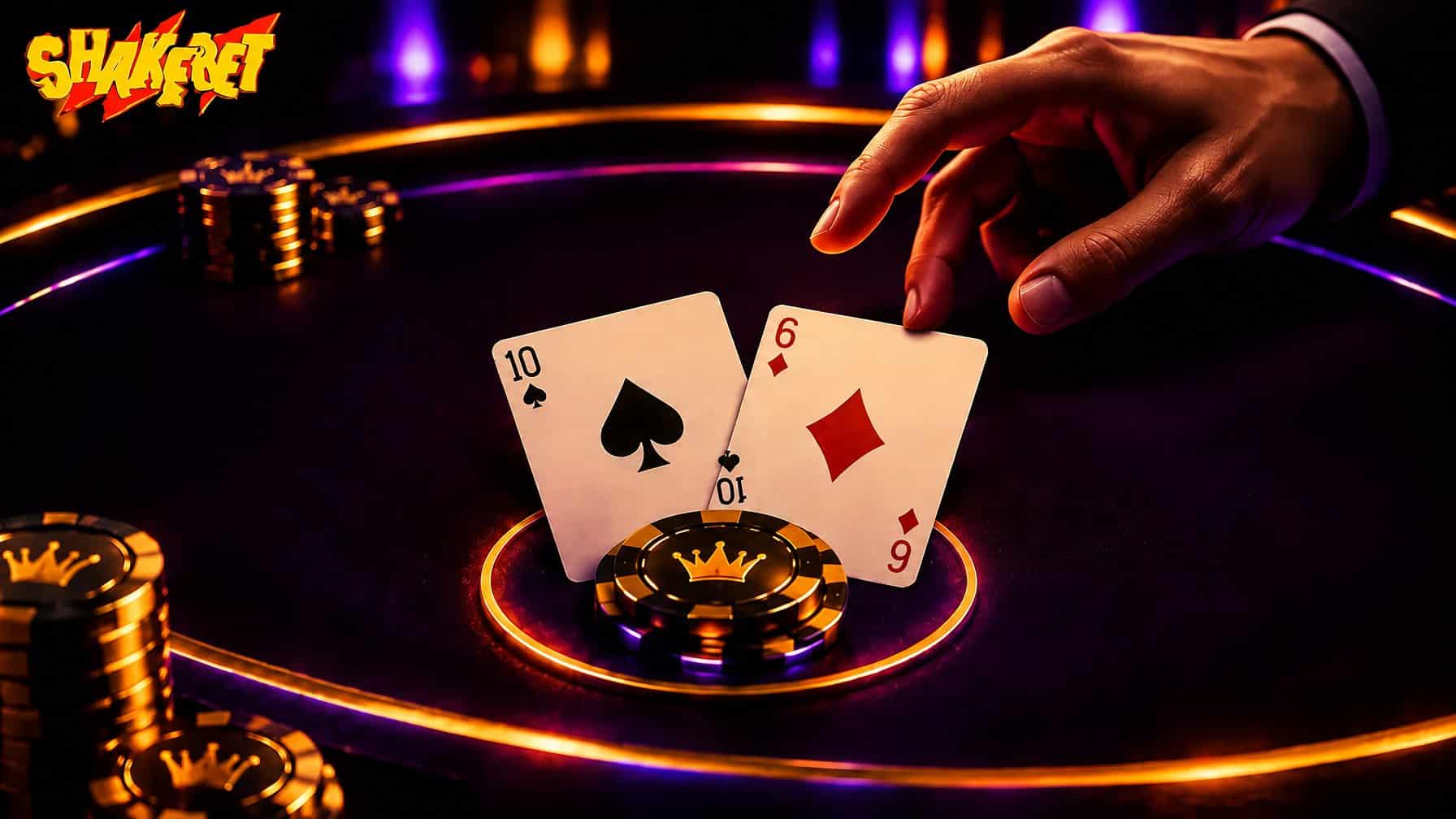
Hard 16 in Blackjack: Hit or Stand?
Hard 16 is a tough hand because you’re close to 21, but standing may leave you with a total the dealer can beat. Against a dealer’s 7 or higher, basic strategy generally says to hit; against a 2 through 6, standing is usually the standard play.
Hitting can bust you, especially with a 10-value card. Standing can lose if the dealer makes a stronger total. Neither option feels wonderful, that’s why the dealer’s upcard matters. If surrender is offered, basic strategy may recommend surrendering certain hard 16s, often against a 9, 10, or Ace, depending on the rules.
Hard 12 to 15: Where the Doubt Lives
Hard 12 to 15 are known as “stiff” hands: one high card could bust you, yet the total may not be strong enough to win. Basic strategy usually says to stand against a dealer’s 4, 5, or 6, and hit against a 7 or higher.
For 12, the recommendation can differ against a dealer’s 2 or 3, so check a chart that matches the table rules. To browse table games in play, visit the games lobby; the available options and rules can vary.
Soft Hands, Briefly Revisited
You probably know the soft-hand idea already: an Ace gives your total a little wiggle room. The useful part is knowing when to use it.
Soft hands can often take another card safely, while some dealer upcards make standing or a blackjack double down the stronger play.
A Quick Refresher on Soft Totals
A soft total includes an Ace counted as 11 without pushing the hand over 21. For example, Ace-6 is soft 17. If you draw a 9, the Ace can count as 1, making your total 16 instead of busting. That flexibility is what makes soft hands different from hard totals.
Making the Right Move With a Soft Total
Soft hands aren’t automatic hits, the dealer’s upcard and the table rules help decide. For example, under common multi-deck rules where the dealer stands on soft 17 and doubling is allowed, basic strategy often recommends doubling soft 18 (Ace-7) against a dealer 3–6. Against a 9, 10, or Ace, hitting is generally preferred; against a 2, 7, or 8, standing is usually the play.
Other soft totals may also be doubled when the dealer shows a weak card. If doubling isn’t allowed or the table uses different rules, the right move can change, so use a chart matched to your game.
Hard Hands, Briefly Revisited
A hard hand has no Ace counted as 11, so it offers less room to recover if you draw a high card. The best move depends on your total and the dealer’s upcard: sometimes you’ll stand and let the dealer take the risk; sometimes you’ll need to hit.
A Quick Refresher on Hard Totals
A hard total is any hand without an Ace, or one where an Ace must count as 1 to keep you under 21. For example, 10-6 is a hard 16. Draw a 10-value card and you bust, so every extra card carries a real risk.
Making the Right Move With a Hard Total
As a general guide, hit hard 8 or less. With 9–11, consider doubling when the dealer’s upcard makes it favorable; otherwise, hit. Hard 17 or higher is usually a stand.
The tricky range is 12–16. Under common multi-deck rules, basic strategy generally says to stand on 12–16 against a dealer 2–6, but hit against a 7 or higher. The dealer’s weak card makes standing more appealing; a strong upcard means you may need to improve. Exact plays can vary with the rules, so use a chart for your table.
Why the Dealer Decides Whether Your Hand Is Good
The same hand can feel comfortable in one round and risky in the next because the dealer’s upcard changes the matchup. To judge your position, look at your hand in context, not just at its total. These two quick checks help explain why.
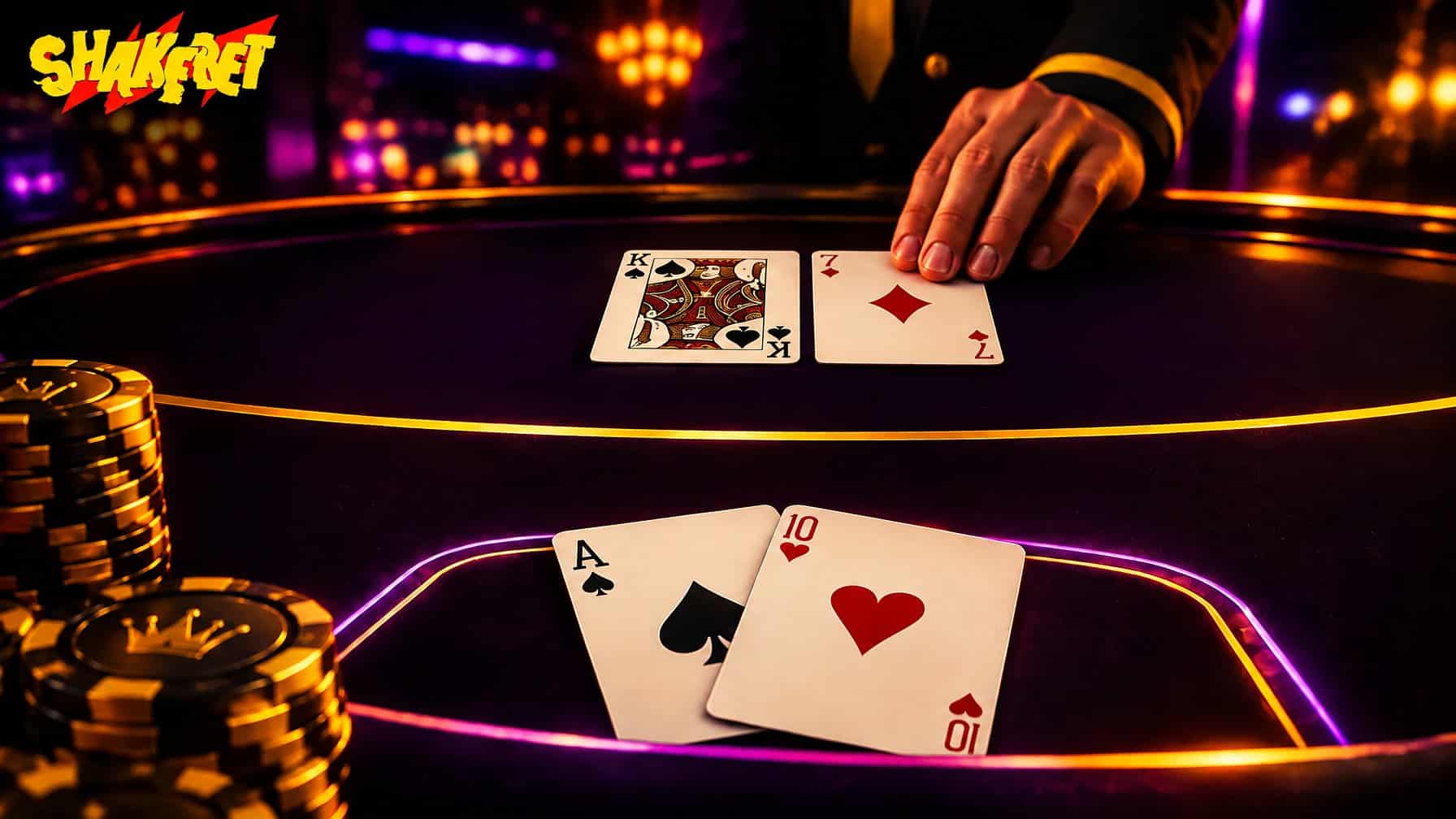
Three Ways to Judge the Same Hand
Take 10-6, a hard 16. As a starting hand, it’s awkward: you’re close to busting, but the total is not especially strong. As a final total, 16 may win if the dealer busts, though it can be beaten by many made hands.
Now compare it with the dealer’s upcard. Against a 6, standing is generally the basic-strategy choice because the dealer has a greater chance to bust. Against a 10, hitting is usually recommended because the dealer is more likely to make a strong total. One hand, three useful views: starting cards, final total, and matchup.
Weak and Strong Dealer Cards, and What They Do to You
A dealer’s 4, 5, or 6 is generally considered weak because the dealer must draw on a low total and may bust. For example, with hard 13 against a dealer 5, basic strategy usually says to stand and let the dealer take the risk.
A 10-value card or Ace is among the dealer’s strongest upcards: the dealer is more likely to finish with a high total or make blackjack. With that same hard 13 against a dealer 10, basic strategy generally says to hit. The upcard doesn’t predict the result, it helps you choose the better play over time.
Rule Differences That Quietly Change the Answer
Before you follow a blackjack chart, take a quick peek at the table rules. Small details can nudge the best strategy, and the game’s overall odds, in different directions:
- Blackjack payout: A 3:2 payout returns more on a natural than 6:5. It affects the game’s overall value, though not usually your move on a particular hand.
- Number of decks: Some close decisions change between single- and multi-deck games, so pick a chart that matches.
- Dealer hits soft 17: This usually benefits the house and can shift a few strategy calls.
- Surrender: If it’s available, surrender can be sensible on certain tough hands, depending on the dealer’s upcard and the rules.
Basic-strategy charts, including those from Wizard of Odds, account for these differences. Match the chart to the table, and let the rules do the talking.
Blackjack Hand Beliefs, Fact-Checked
Even seasoned players can pause when a familiar hand lands. Let’s sort a few table-talk “rules” from what basic strategy actually recommends:
- “Split every pair of tens.” Usually not. A hard 20 is already a powerhouse, so keep it together and stand.
- “A 16 is always a stand.” Not so. Against a dealer’s 7 or higher, hitting is generally the standard play; surrender may be an option if the rules allow it.
- “Never hit a 12.” The dealer’s card matters. Basic strategy often calls for a hit against a 2 or 3.
- “The dealer has a 6, so I’ve won.” Not yet! A 6 is a weak upcard, but the dealer can still make a strong hand.
- “I’m on a streak, so my next hand is safer.” Past results don’t predict the next deal.
Hand Strength Ranked by Expected Value
Expected value (EV) estimates the average result of a hand over many plays, not what’s guaranteed in your next round. There isn’t one universal EV for each hand: the dealer’s upcard, deck count, and table rules all matter.
The table below uses six decks, dealer stands on soft 17, and a dealer 6 upcard as a shared comparison. Values are approximate, based on composition-dependent figures and optimal play; a starting 20 means two 10-value cards.
| Hand | Dealer Upcard Assumed | Expected Value (per unit bet) | Source |
| Blackjack (natural) | Any; dealer has no blackjack | +1.50 | Wizard of Odds |
| Starting 20 | 6 | About +0.70 | Wizard of Odds |
| Starting 11 | 6 | About +0.65 | Wizard of Odds |
| Pair of Aces | 6; split | About +0.40 | Wizard of Odds |
| Soft 18 | 6 | About +0.20 | Wizard of Odds |
| Hard 16 | Especially dealer 10; compare low card too | About +0.20 | Wizard of Odds |
| Hard 12 to 15 | Compare dealer 2–6 with 7–Ace | Depends strongly on upcard | Wizard of Odds |
Frequently Asked Questions
-
Yes. If you have a natural and the dealer also has one, the round is a push: your original bet is returned. A natural usually beats other hands, but blackjack payouts differ between tables, so check the rules before you play.
-
No. A soft 17 includes an Ace counted as 11, so the Ace can switch to 1 if you draw a card. A hard 17 has no such flexibility, making another card riskier.
-
Usually, start with one hand. It’s easier to follow your decisions and keep track of your budget. If you play two hands, remember that the dealer’s cards affect both, not just the hand you’re focused on.
-
Yes, a natural is the strongest starting hand. It’s an Ace and a 10-value card dealt as your first two cards. It typically wins unless the dealer also has a natural, and its payout depends on the table’s rules.
-
Hard 16 is one of the trickiest hands. You’re close to busting if you hit, but standing may leave you with a total the dealer can beat. Check the dealer’s upcard, and the table rules, before choosing.